The Pattern of Your Bedsheets
Isn’t it funny what we notice when we look back at old photographs? Lately, I’ve been thinking about my own editing style, and how it quietly shapes the way I see, remember, and photograph life.
When I look at images of myself or my family from years ago, I don’t just see faces. I scan every detail. The art on the walls. The tablecloth. The pattern of the bedsheets. I notice the wallpaper, the objects sitting on a table, the clothes we wore. I count the candles on the cake. I’m trying to understand life as it was back then. Who I was. Where I lived. What home looked like.
Photographs become a way of studying our past.
There is, of course, something undeniably beautiful about images that are white and bright and glowy. They feel soft and polished and ideal. But in those images, I can’t see the pattern on the bedsheets. I can’t tell what the room looked like. And as a photographer, I often ask myself: do I want to show life as it is, or do I want to enhance it, smooth it out, make it prettier than it really was?
This aesthetic shows up so often in newborn photography. And I can’t help but wonder, whose newborn phase actually looked like that?
A few days ago, I was editing a newborn session when I came across one image that made me pause. A dad was holding his baby, trying to get them to burp, when suddenly the baby spit up. The photo froze the exact moment: the dad’s shocked expression, the mom instinctively jumping in with a cloth, and the baby calmly existing, spit running down their mouth.
I hovered over the image, debating whether to include it in the final gallery. The perfectly styled, white, glowing newborn photos came to mind. I realized I had never seen an image of a baby spitting up, or parents looking genuinely surprised. Maybe no one wants a photo like that.
But then I thought about my own child in those early months. They were hard. They were not glowy. They were filled with stinky diapers, spit-up clothes, exhaustion, and dark circles under tired eyes.
So I asked myself: do I want to remember things as they truly were, or as we’ve been conditioned to believe the newborn phase should look?
Of course, I included the photo.
Because I believe it’s important to show all of it. The cuddles, the tenderness, the love — but also the mess, the surprise, the realness. Not everything was easy, and that is part of the story.
I have a feeling that years from now, these will be the images you linger on the longest. Studying the muslin cloth. Reading your facial expressions. Noticing your partner’s reaction. Trying to understand what life looked like back then.
That’s what photographs are for.
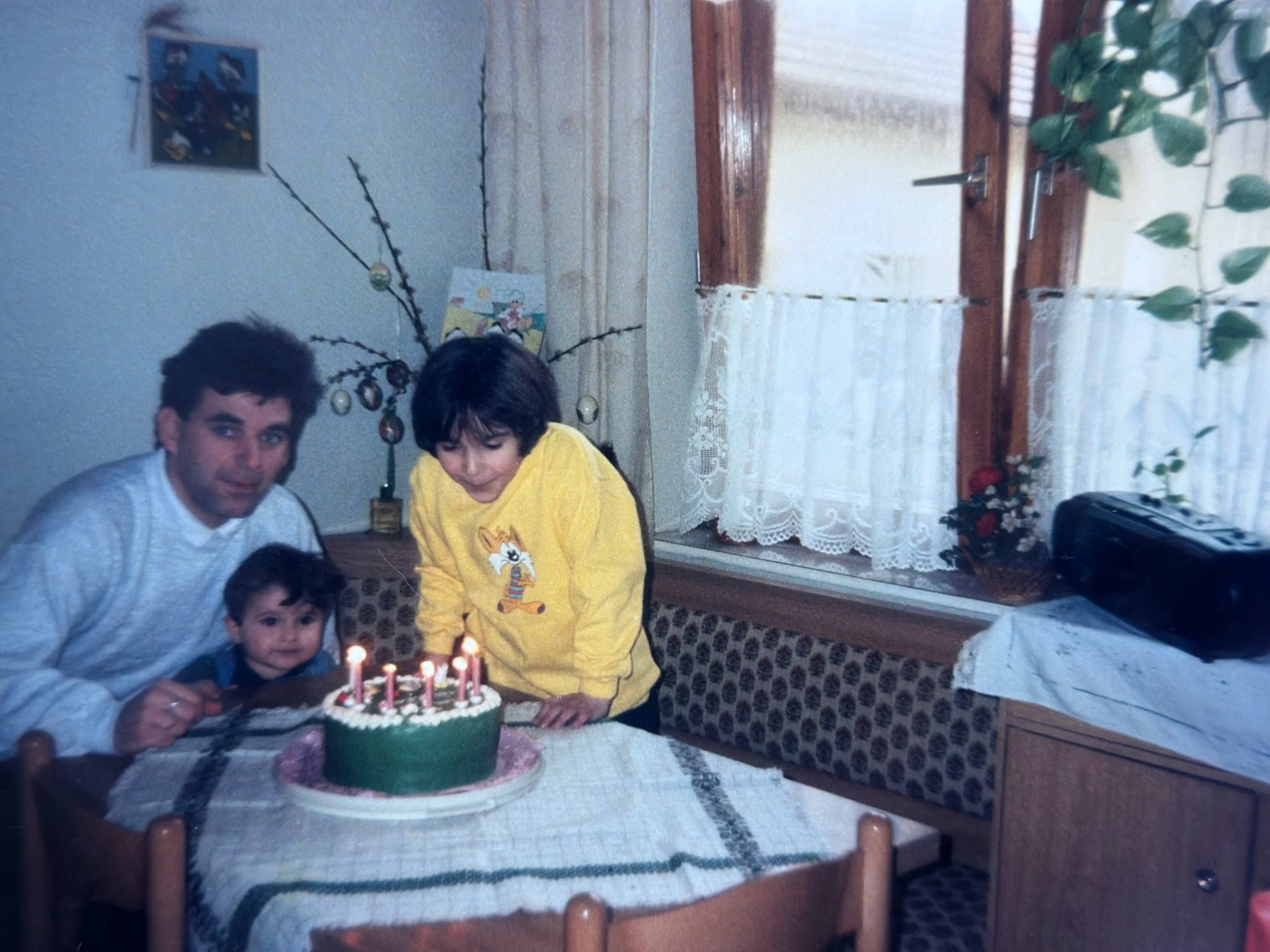
I find myself searching this image for traces of the past — the patterns, the cassette player, the faux flowers on the window — small clues from another life.